
Why are there still so few women on panels?
As International Women’s Day approaches, it’s time to reflect if we are serious about change, or are we just paying lip service to equality?

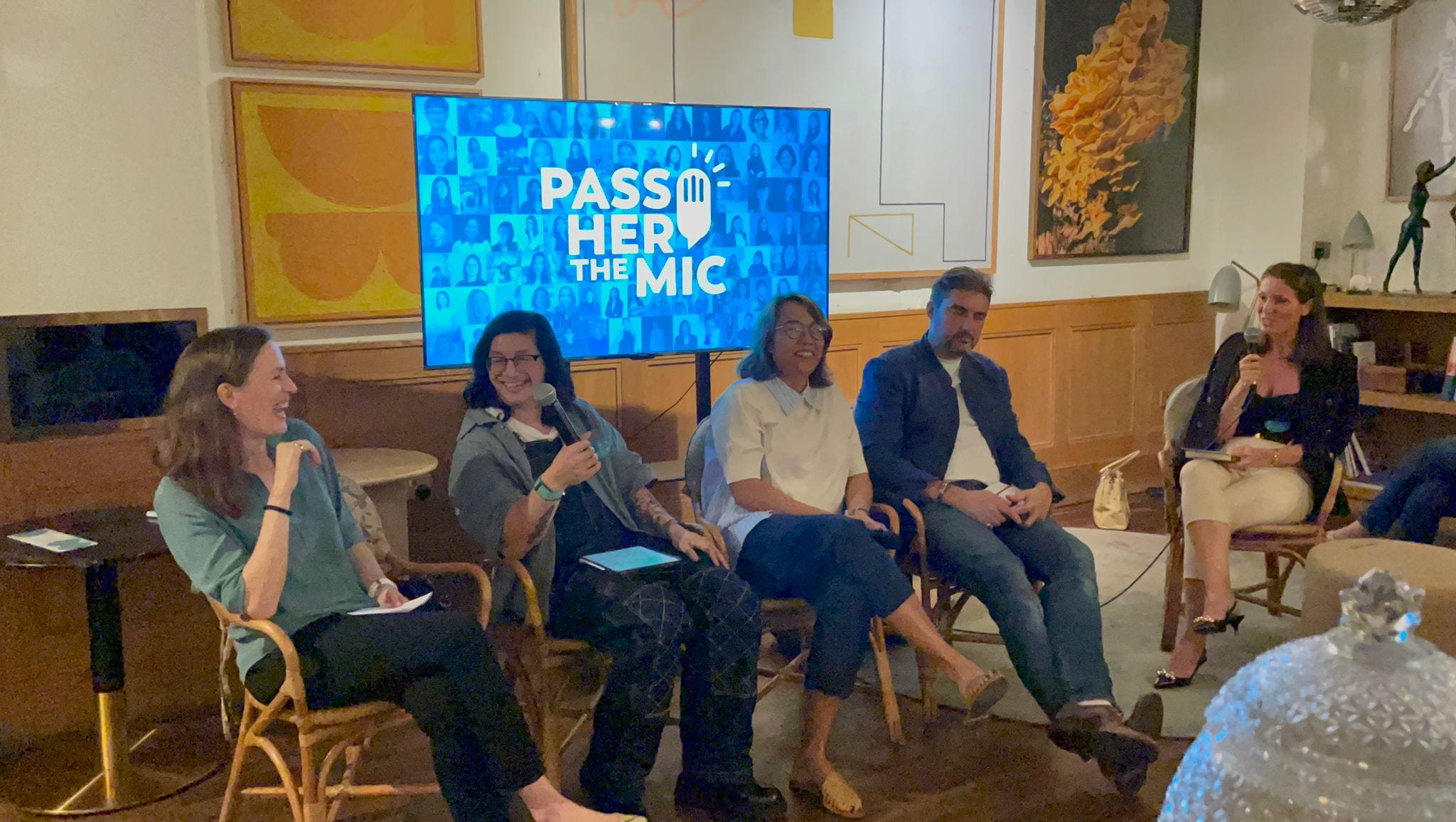
Another industry conference, another lineup of male speakers.
We have all seen it: The same authoritative voices, often with the same perspectives, on stage.
And every time an all-male panel (manel) happens, it sends a clear message: Women’s expertise is still considered optional.
As International Women’s Day approaches, companies will flood social media with posts about gender equality, yet the reality remains bleak.
At COP28 in 2023, only 15 out of 133 world leaders were women, and women made up just 34% of national delegates.
In politics, women’s representation has improved but remains unequal. As of 2024, women hold 26% of parliamentary seats globally, up from 11% in previous decades. In research, women now represent 41% of researchers globally, an increase from 28% in 2001.
So I have to ask: Are we serious about change, or are we just paying lip service to equality?
I have a two-year-old daughter. I wonder what kind of world she will grow up in. One where she sees women leading conversations, shaping industries, and taking up space? Or one where she still has to fight for a microphone while men effortlessly dominate the stage?
The lack of women on panels is systemic. It’s convenient. And unless we demand change, it will continue.
The excuses are old, the problem is not new
Let’s address the usual excuses head-on:
“We tried, but we just couldn’t find any qualified women.”
This is a network problem. Research shows that event organisers overwhelmingly select speakers from existing (male-dominated) networks, reinforcing the cycle of exclusion.
“We pick the best people for the job.”
Studies prove that men are perceived as more authoritative, even when equally qualified women are available. This bias is deeply ingrained and it’s lazy to pretend it doesn’t exist.
“Women decline invitations more often.”
Yes, because they are twice as likely to suffer from imposter syndrome in male-dominated industries. That’s not a reason to stop asking, it’s a reason to actively encourage and support women to step forward.
The structural barriers that keep women off stage
If the excuses weren’t enough, let’s break down the systemic barriers at play:
The criteria for panels are designed to exclude women.
Many events only invite CEOs, founders, or senior executives, roles where men still outnumber women globally. In the Fortune 500, only 10% of CEOs are women. That means panels self-select for male dominance before the invitations even go out.
Men keep referring other men.
Most speakers are chosen through personal and professional networks. If those networks are overwhelmingly male, the speaker lists will be too. And let’s be honest: Men recommend other men. Research shows that in leadership and hiring decisions, men unconsciously prefer candidates who remind them of themselves.
Unconscious bias affects who gets the mic.
A 2016 study on conference panels found that even when women were experts in their field, they were invited to speak less often than men. And when they do get invited, they are frequently moderators rather than expert panelists, positioned to facilitate rather than lead.
Being a panelist leads to bigger opportunities.
Speaking engagements are about credibility. Panels lead to job offers, funding opportunities, promotions, and media exposure. When women are left out, they lose access to the very platforms that elevate careers.
What must change, starting now
If we want to stop talking about the problem and actually fix it, here’s what needs to happen, immediately:
Event organisers: No more manels
Commit to a 50/50 gender split on panels. If you can’t find women, expand your search. Use databases like Pass Her The Mic, The Brussels Binder or Women in AI to source female experts.
Stop limiting speakers to C-suite executives. Open the door to directors, senior managers, researchers, and industry practitioners, many of whom are women.
Track gender representation. If your panel is 80% men, fix it. Audit your speaker lineup and hold yourself accountable to improving gender balance.
Male speakers: Use your power
Refuse to speak on all-male panels. Many high-profile male speakers including Richard Branson and former President Barack Obama have publicly committed to this policy. If they can do it, so can you.
Recommend a woman instead. If you’re invited to a panel, actively suggest a qualified female colleague.
Women in leadership: Pay it forward
Encourage other women to say yes. If you’ve spoken on panels before, mentor other women on how to step forward.
Call out gender imbalances. If you’re invited to speak and see a lack of diversity, say something. Challenge organizers to do better.
Corporate leaders: Make panel representation part of your DEI goals
Treat speaker diversity like any other business metric. If your company’s executives keep appearing on all-male panels, ask why. Make diverse representation a KPI for your leadership team.
Publicly pledge to reject all-male panels. The Washington Post reported that when companies commit to this publicly, it forces real change.
Representation shapes the future
I think about my daughter often. One day, she’ll walk into a conference room, a boardroom, a pitch meeting.
Will she see women leading the conversation? Will she hear voices that sound like hers?
Or will she still have to fight to be heard, because too many of us didn’t bother to change the system?
We don’t need more reports, more panel discussions about diversity, more well-intentioned LinkedIn posts.
We need action. And it starts now.
Hi Shawn, there is a terrific initiative here in Australia that was inspired by the Campaign Brief debacle, which is called #FillThisPage https://fillthispage.com/ and lists hundreds of brilliant, inspiring and highly talented female creatives to fill the news, blogs, front pages, creative rankings, social media and the entire Australian ad industry with more female creative talent. Check it out. And if you are organising panels, have a look. But please do not add insult to injury by expecting it for free.
Thanks Darren, it sounds amazing. Will check it out!